
There are two ways to have low progesterone, and understanding that difference is key to understanding your cycle. The first is an anovulatory cycle, when you don’t ovulate and therefore make no progesterone at all. The second is a short luteal phase, when you do ovulate, but your progesterone window is too brief, and the hormone never reaches its full potential.
Progesterone is not just a lab value. It’s a story told by your cycle, and one of the clearest ways to understand that story is to chart your basal body temperature or BBT.
The temperature story
After ovulation, progesterone pushes BBT higher. You can track that change with an under-the-tongue thermometer or one of several wearables. When you see a consistent shift of at least three higher temperatures, you know that ovulation has occurred. From there, a healthy luteal phase should last for at least ten days. If your temperature never rises, it’s evidence you did not ovulate (even if you get a bleed). If it rises but falls again before ten days, you had a too-short luteal phase.
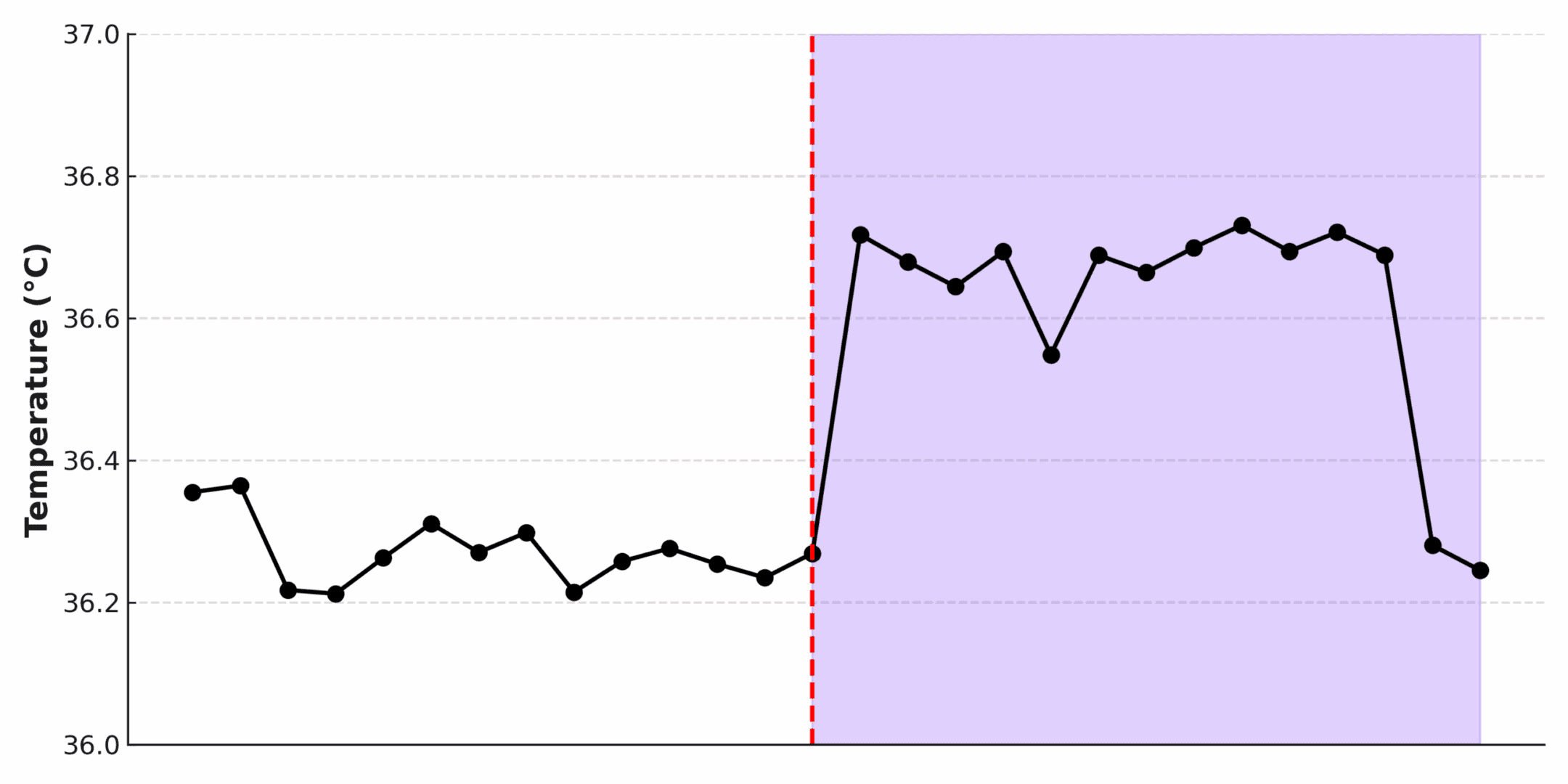
It can help to think in terms of ‘progesterone days’, which are the high-temperature days when you actually make progesterone. More progesterone days mean more of its benefits for your uterine lining, breasts, brain, and immune system. And too few progesterone days means too little progesterone, even if your measurable progesterone level on any given day is within the normal range.
💡Tip: This way of understanding progesterone is central to CeMCOR’s Quantitative Basal Temperature (QBT) system, which makes temperature charting a precise, research-validated tool. QBT analysis doesn’t just confirm ovulation but can also quantify how much progesterone you make across the luteal phase.
Testing progesterone
While charting is the best way to track progesterone, you can also measure it with an at-home urine test or a serum (blood) test from your doctor. Timing is crucial because peak progesterone is in the middle of your luteal phase: roughly seven days after ovulation and seven days before your next period. That could fall anywhere between day 14 and 28, depending on the length of your cycle.
So rather than relying on the standard “day 21 progesterone test,” a better approach is either to chart temperatures to pinpoint ovulation and then test five to seven days later, or to test when you believe you’re about a week from your period. In that case, wait until your period actually arrives before interpreting the result. Then ask yourself: “Was the test done within the 14 days before my period?” If not, the result is meaningless.
Timed properly, a serum progesterone level of 3 ng/mL (9.5 nmol/L) is enough to confirm ovulation, but higher is better, and an optimal level is above 10 ng/mL (30 nmol/L). Don’t stress about a low-normal number, though, because progesterone can fluctuate eightfold in just 90 minutes (because it pulses with LH). So, your test may simply have caught progesterone at a low moment. Also, it’s not really possible to have too much endogenous progesterone.
💡Tip: Take hormonal birth control? There’s no point testing progesterone because you have none.
Perimenopause is when luteal phases start to wobble
One of the earliest signs of perimenopause is that luteal phases begin to shorten. You may still ovulate, but your progesterone window becomes less robust, and that shift is essentially what defines the onset of perimenopause.
Charting BBT can give you a front-row seat to these changes and help you understand the transition as it unfolds.
Signs and symptoms of low progesterone
Beyond charts and lab results, your body gives its own clues when progesterone is low. For example, you might notice fertile-type mucus showing up in the premenstrual phase, spotting before your period, or heavier, more prolonged bleeding. Those are all potentially signs of too-low progesterone.
The big picture
Your progesterone story cannot be captured by a single number. Instead, it lives in your cycle, symptoms, and BBT chart. Tools like CeMCOR’s QBT system, and simply paying attention to the robustness of your luteal phase, can tell you more about your hormone health than any single lab test ever could.
And that story evolves with time. In your twenties and thirties, it’s all about promoting a robust luteal phase. In your forties, it’s about noticing when your luteal phase begins to wobble as progesterone naturally starts to wane.
Chime into the comments with your knowledge and favourite charting/body literacy resources.