
A tendency to allergies or high histamine can contribute to perimenopausal symptoms like night sweats, anxiety, sleep disturbance, fluid retention, breast pain, migraines, and heavy menstrual bleeding.
That’s because histamine increases with estrogen, and estrogen is usually higher than normal during the early years of perimenopause.
In the early phases of perimenopause, estrogen goes up, not down
During perimenopause, estrogen fluctuates widely and can soar to above-normal levels, only to drop down every cycle to the very low level that’s normal during the menstrual bleed.
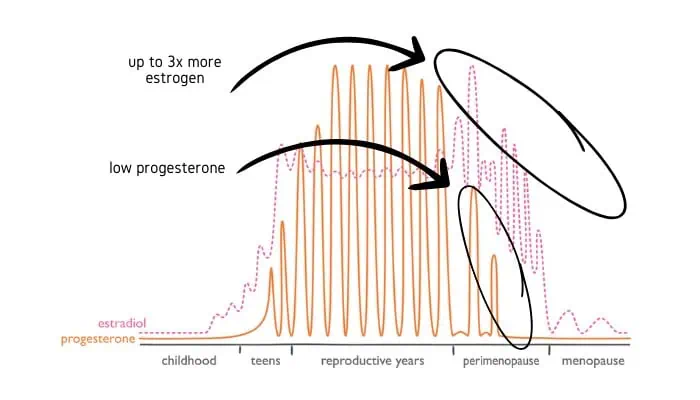
The steeper estrogen withdrawal at the end of every menstrual cycle is one driver of the neurological symptoms of perimenopause. Another is the high histamine or mast cell activation caused by the larger estrogen spikes. (Mast cells are immune cells that release histamine.)
Histamine is a stimulating neurotransmitter
High histamine causes neurological symptoms because histamine is not just an immune or inflammatory mediator—it’s also a stimulating neurotransmitter that promotes alertness and wakefulness. That’s why antihistamines are sedating.
How estrogen increases histamine
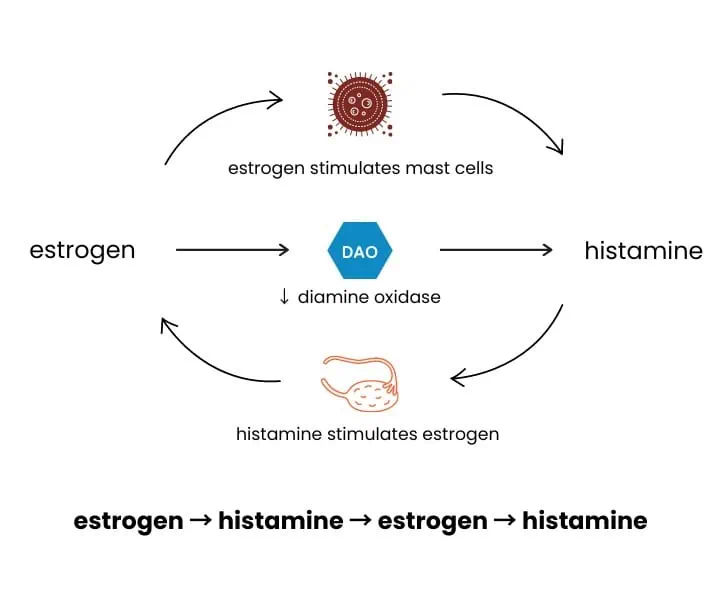
High estrogen causes high histamine via three key mechanisms:
- Mast cell activation: Estrogen activates mast cells, prompting them to release stored histamine and heparin, which is a blood thinner. That’s why mast cell activation can cause or worsen heavy menstrual flow.
- Histidine decarboxylase expression: Estrogen boosts the expression of histidine decarboxylase, the enzyme that converts histidine to histamine.
- DAO enzyme downregulation: Estrogen reduces DAO enzyme activity, which clears histamine.
At the same time, in the other direction, histamine stimulates the ovaries to make more estrogen. The net result can be a vicious cycle of estrogen causing high histamine, causing high estrogen, causing even more histamine.
Losing progesterone
Progesterone should help to keep histamine in check by stabilizing mast cells and upregulating DAO. Unfortunately, progesterone is the hormone lost first during perimenopause. And losing progesterone means losing its natural antihistamine benefits.
💡 Tip: The progestins of hormonal birth control do not have the same beneficial antihistamine effect as progesterone.
Recognizing high histamine
Symptoms of high histamine include:
- urticaria or hives
- fluid retention
- tinnitus or ringing in the ears
- anxiety or agitation
- insomnia
- brain fog
- headaches, especially migraines, and
- breast tenderness.
As you can see, the symptoms of high histamine are quite similar to the symptoms of perimenopause. Of course, high histamine is not the only cause of those symptoms, but it is a cause and one that is fairly easy to address.
A simple way to assess for high histamine is to try an antihistamine medication — such as diphenhydramine (drowsy) or loratadine (non-drowsy) — and see if it helps. If so, consider a natural antihistamine approach.
Natural antihistamine strategies for perimenopause
- Try avoiding histamine-stimulating foods, such as alcohol and cow’s dairy.
- Perhaps reduce intake of histamine-containing foods, especially wine, which is high in histamine.
- Support methylation with supplements like B vitamins, choline, and SAM-e to promote the healthy breakdown of histamine via the enzyme Histamine N-methyltransferase.
- Consume more bitter compounds like coffee, cruciferous veggies, berberine, or perilla seed, because bitter constituents stabilize mast cells.
- Address gut health by treating underlying issues, such as SIBO, that can exacerbate mast cell and histamine problems.
- Consider taking quercetin, which stabilizes mast cells, or vitamin B6, which upregulates the DAO enzyme. (But be careful with the dose of vitamin B6.)
- Try body-identical progesterone, which can counterbalance high estrogen and relieve histamine symptoms.
Have you had relief from an antihistamine approach? Share your story and strategies in the comments.
For more, refer to the histamine sections in my books about periods, hormones, and metabolism.