
Almost all types of hormonal birth control switch off ovarian function and, therefore, switch off the ovarian hormones estradiol, testosterone, and progesterone. Here’s a bit more about each method.
Hormones during a natural menstrual cycle
In a healthy, natural menstrual cycle, hormones are made by ovulation. Specifically, the ovarian hormones estradiol and testosterone are made on the way to ovulation, and then progesterone is made after.
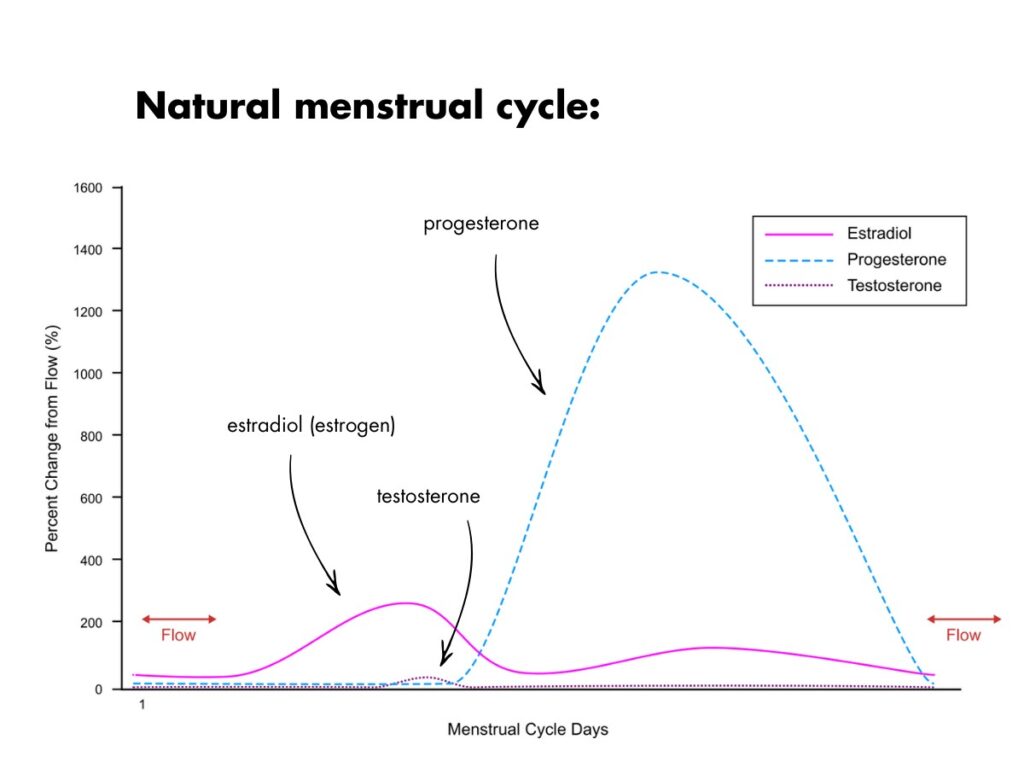
💡 Tip: Ovulation is the main hormonal event of the menstrual cycle.
Non-hormonal birth control methods such as condoms, the copper IUD, and fertility awareness methods do not suppress ovulation, so do not alter hormones, and the hormonal pattern should be normal, assuming nothing else is interfering with ovulation.
The hormonal IUD does not always suppress ovulation, although it sometimes can. If the hormonal IUD permits ovulation, then the hormonal pattern should be a natural cycle, even if menstrual bleeding is suppressed. (In the case of IUD-suppressed bleeding, the hidden hormonal cycle can be tracked with basal body temperatures or BBTs.)
Hormones on a combined estrogen birth control method
On a combined estrogen method, such as the pill, patch, or NuvaRing, ovulation is suppressed, and all hormones—estradiol, testosterone, and progesterone—are flat-lined. Some of the lower-dose combined pills permit a slight rise in estradiol, but most combined methods suppress it completely until the sugar pill week, when estrogen will rise a little, followed by an induced withdrawal bleed.
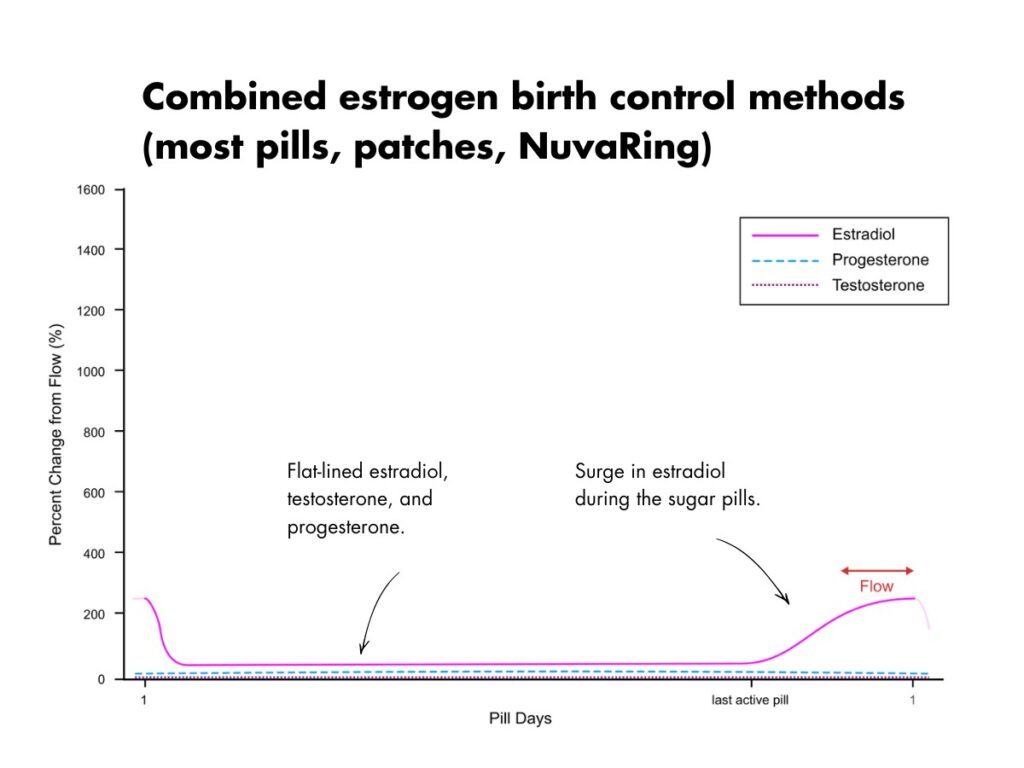
💡 Tip: Pill withdrawal bleeds are not menstrual cycles. And there’s no medical reason to bleed monthly on the pill.
Hormones on a progestin-only method
On some progestin-only methods, like mini-pills, estradiol can rise a little, but not as much as with an ovulatory cycle. And ovulation is usually suppressed, so there’s no progesterone.
Progestin or hormonal IUDs are different in that they can permit normal ovulatory cycling.
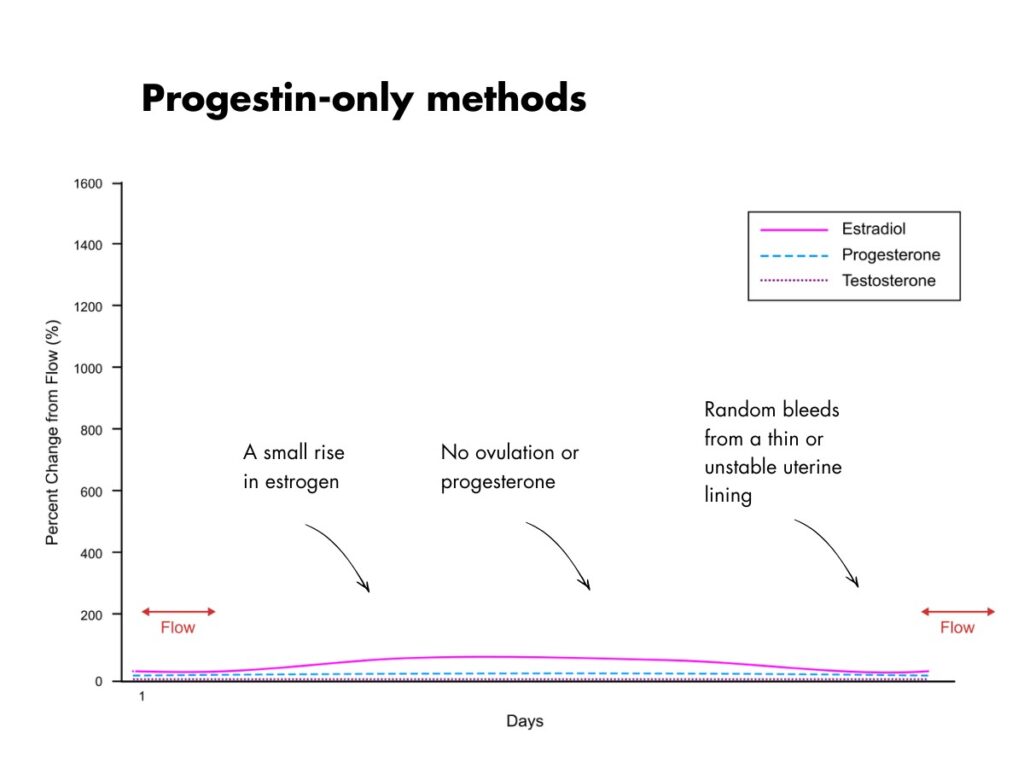
Bleeds on progestin-only methods can occasionally be ovulatory (especially with hormonal IUDs), but more commonly, they’re they’re anovulatory bleeds or breakthrough bleeding from a uterine lining that has been thinned and destabilised by the progestin.
But doesn’t birth control supply the missing hormones?
Hormonal birth control supplies synthetic hormones, but they are not usually estradiol, and they’re never progesterone.
The synthetic estrogen used in birth control is ethinylestradiol. Because it’s not estradiol, it does not show up on a blood test for estradiol.
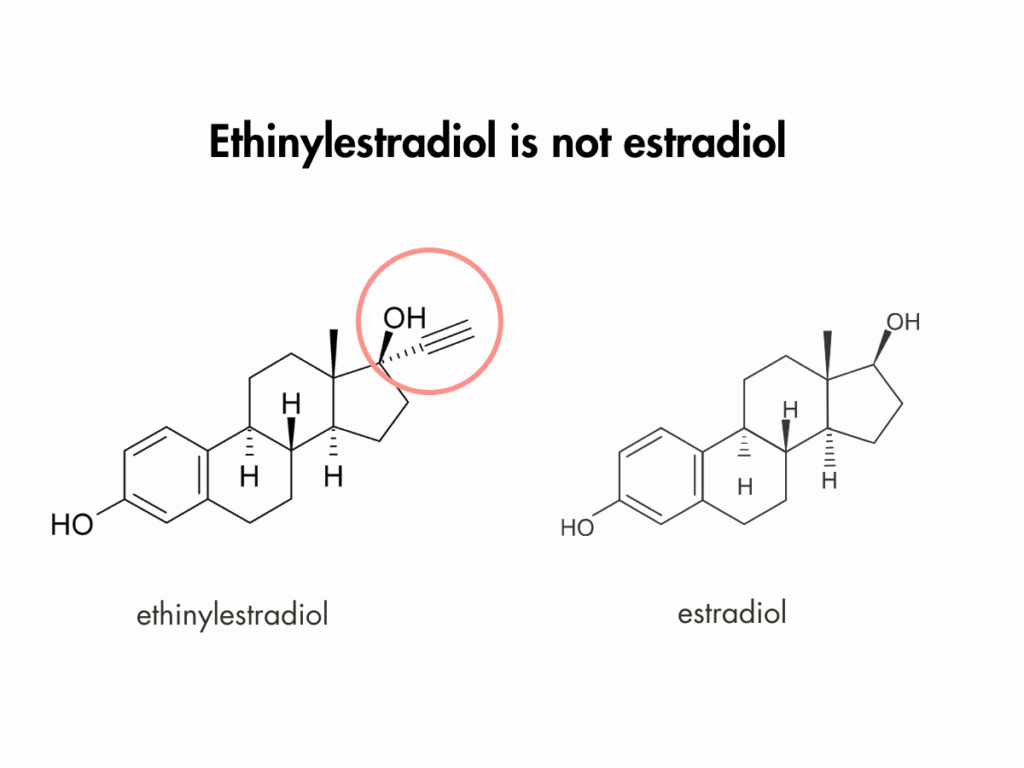
And although ethinylestradiol can have some of the same effects as estradiol, it also has some quite different effects, particularly for the brain and bone health.
Likewise, progestins are not progesterone.
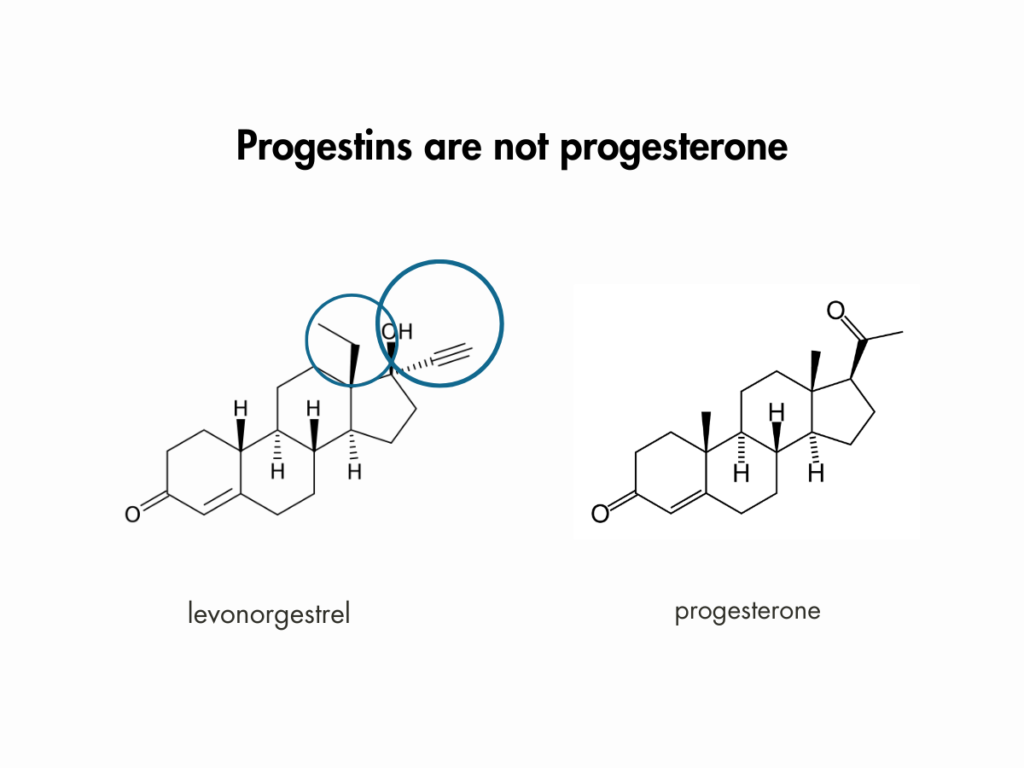
Sadly, progestins can have quite different—in many cases, opposite—effects compared to progesterone. See The crucial difference between progesterone and progestins.
Chime in with your experience and questions!