
The ovarian hormones estradiol and progesterone are highly beneficial for general health, and the only way to make them is with regular ovulation.
Lara Briden - The Period Revolutionary
Leading the change to better periods and hormones
PCOS is defined as a set of symptoms including androgen excess and anovulatory cycles. In simplest terms, PCOS is the condition of androgen excess when all other causes of androgen excess have been ruled out. It’s an umbrella diagnosis which can be caused by different underlying drivers or functional types. The four functional types of PCOS are insulin-resistant PCOS, post-pill PCOS, inflammatory PCOS, and adrenal PCOS.
The ovarian hormones estradiol and progesterone are highly beneficial for general health, and the only way to make them is with regular ovulation.
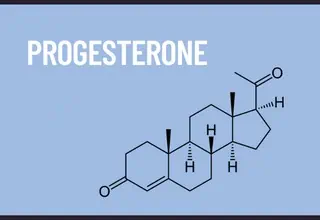
Progesterone is important for women’s health. Yet for decades, it has been ignored or wrongly blamed for side effects it doesn’t cause. How did that happen?
Progesterone was discovered shortly after estrogen, missing the chance to be included in the simplified narrative of “testosterone for men and estrogen for women.” To complicate things further, progesterone couldn’t initially be made into an oral medication, so it was sidelined in favor of synthetic progestins.
According to a 2017 study, pain is the most frequently reported symptom of PCOS, even though pain is not a symptom of PCOS.
The solution to this paradox is that both PCOS and period pain are common, so it’s easy to have both a PCOS diagnosis and pelvic pain. But, importantly, the PCOS diagnosis can only explain irregular periods or symptoms of androgen excess (e.g., facial hair). It can’t explain the pain!
Also, PCOS cannot be diagnosed by ultrasound.
Polycystic ovary syndrome (PCOS) is not one disease. Instead, it’s “a heterogeneous disorder with different underlying biological mechanisms.” In other words, PCOS is a collection of symptoms—primarily androgen excess and anovulatory cycles—caused by different underlying mechanisms or drivers.
To effectively treat PCOS, you need to identify which mechanism (or combination of mechanisms) is driving your symptoms.
That’s why it’s helpful to identify your functional type of PCOS. These include: